We might miss the sound of bells after we leave Europe.
We might miss the sound of bells after we leave Europe.

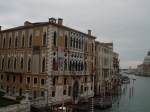
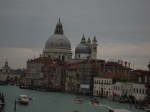

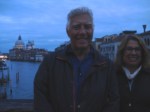


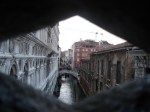
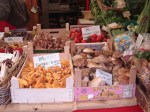
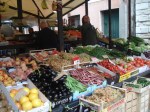
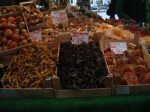
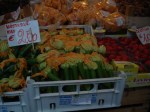

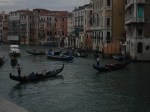


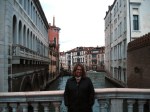
Venice on a budget is possible. When we first started planning this trip, we made a wish list of places we’d like to stop. Venice went onto the list almost as a joke—we were certain we couldn’t travel in the Veneto on our limited budget. We scoured the internet but didn’t find anything with decent reviews that was well located. Then we came across Al Campaniel – A B&B for 70 Euros a night. I was reluctant, but could not have been more delighted by this wonderful home. http://www.tripadvisor.com/Hotel_Review-g187870-d563561-Reviews-Al_Campaniel-Venice_Veneto.html
Marco, the owner, made us feel as if we lived in Venice. The room was lovely with a big queen-sized bed and private bath, a window opening onto a little garden area, and the location could not have been better—a one- minute walk from the San Toma vaporetto stop. And the vaporetto pass saved us. For about 12 Euros per day, a multi-day pass covers unlimited rides. Since it was raining about half the time we were in Venice, we really took advantage of the ability to hop on and off to see the sights and cover territory without getting lost (and wet) on the narrow lanes.
We also saved on food costs by eating our main meal at lunchtime—which we’ve done as much as possible through most of this trip. Then in the evenings we ate something light—a salad, or pizza, or in the case of Venice, a cichetti crawl. As they do in Spain, many of the wine bars and shops put out lovely little snacks which you can buy for a small amount of money and enjoy with a glass of wine. A couple of stops along the way home took care of the evening meal. Then there are our picnics, of course. With the incredible Rialto market within a short walk, we managed to pick up fruit, (fresh figs and dates!) wine, cheese, and bread along the way and had our “dinner” in our room one evening. Marco even chilled the Prosecco for us and provided glasses on our last night—just ideal.
The Scuola San Rocco was a revelation. If you are a Tintoretto fan, you will never see so many in one location—at least 50 scenes from the bible, a real labor of love by the Venetian artist. The Frari church, right next door, was also pretty amazing. And both of these sights were right near our B&B. Of course the Doge’s palace and St. Marks basilica were unbelievable, too. And of course, we had another bell tower to climb. But alas, this campanile had no stairs, only an elevator. Maybe in the humid weather that was a blessing. I posted a short video of the Vivaldi concert already—Impressioni Venezia is a very good chamber group, and the concert was a great way to spend an evening. We would have loved to attend “Musica a Palazzo” where opera is performed in an actual Venetian palace, but their schedule and ours just didn’t work together. Not sure it was in the budget anyway, but a blowout from time to time for something really special is not out of the question. It was highly recommended by people we met.
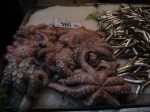
The Rialto market was great fun for we two foodies–as you’ll gather by the disproportionate number of “food porn” shots included in this slide show.
There were no crowds in early October—we were really lucky to enjoy Venice in such a relaxed and stress-free way. And as far as the talk that Venetians are unfriendly—we met more people here than any place we’ve visited. While lunching near the Rialto bridge at Trattoria da Bepi, we got into a nice long talk about politics and food with Giorgio and Loris, the owner, and got lots of inside information about the city.Venice was the perfect romantic getaway – although at this point in our trip, getting away has already been accomplished. Enjoy the photos. Click on a thumbnail image and toggle through using the arrows.
Graduation craziness at the University of Padua. Why waste a hazing on freshman, when you can torment a newly-minted doctor?
Before we get to Bilbao, I have to mention the gorgeous drive along the coast road from Donostia. We stopped in a few places for photos, but really felt like there was a painting around every bend. This is just one example of the views along that wonderful drive.
We had fun for a few days in Bilbao. The highlight, of course, was the incredible Guggenheim museum. It’s amazing how the genius of Frank Gehry united the river and the city so perfectly. We saw lots of tourists like us and even wedding parties taking their photos with the museum as background.

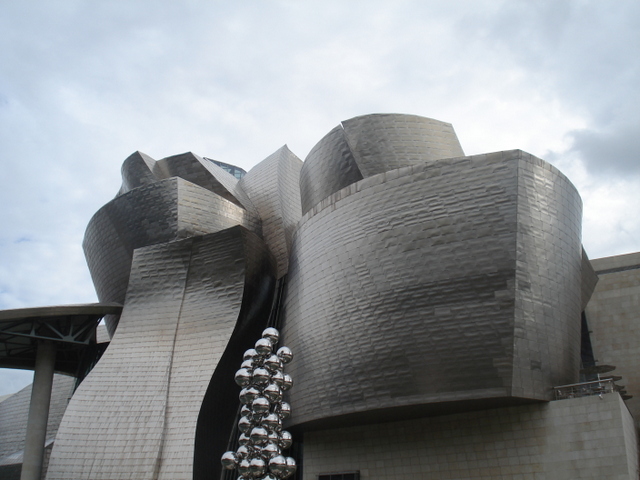
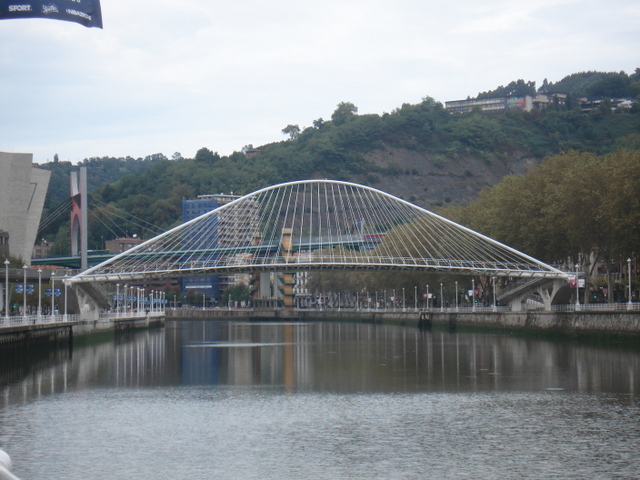
As for the art—well—apologies to contemporary art fans—but a lot of it left me cold. We enjoyed Richard Serra’s work The Matter of Time, part of the permanent collection, with the enormous scale working so beautifully with the building. The “baroque” installation was an interesting juxtaposition of old and new, though maybe a bit contrived. But the featured exhibition by the late Catalan artist Antoni Tàpies: From Object to Sculpture (1964–2009) seemed to me like an excuse for art historians to write thousands of words of nonsense. I’m sure I’ll be accused of being anti-intellectual for that statement. Oh well, for me, sometimes a pile of plates is just a pile of plates. Sorry!
Aside from that, you may have seen our facebook post on the Txikiteo in Bilbao. We were delighted to see the lively crowd in the old town, where it was PACKED both night and day for a tapas crawl. People of every age and demographic gathering in the bars, spilling out into the streets, singing, eating, talking. At Kasko, where they had one of the best pintxos selections, including carpaccio of octopus with potatoes and foie gras with sour apple puree, and others, made it hard to leave, even though we tried to sample just two pintxos at each place. 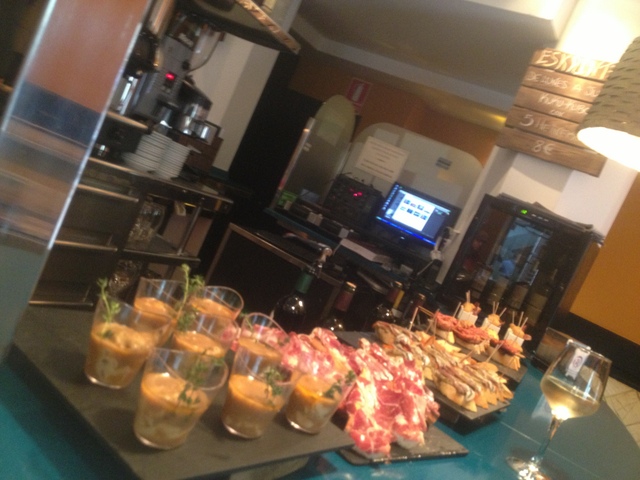
Then we got caught up—at least I did—with a group of men singing scores from American musical comedies. When they realized I knew the words in English, I became very popular. Nothing like singing, loudly and badly, with a group of cute drunken Bilbaoinos.
It was a great time in Bilbao, and it did my heart good to see that the city was clean and safe and being reinvented a little each day. So different from the depressing city, under the fascist Franco, that I remembered from years ago. Public transportation was excellent. We took a bus from the airport to the city center for about 3 euros, and the tram circling the city is inexpensive, quiet, and clean. Ray managed to pick up a pretty girl on the tram—typical of him! Here is her photo, but I don’t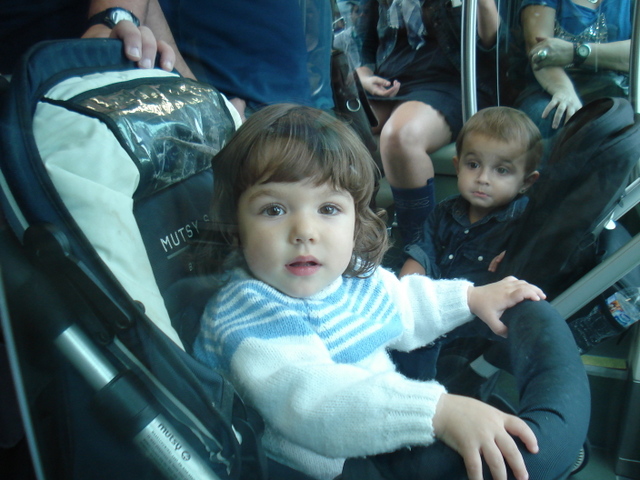 think he got her number.
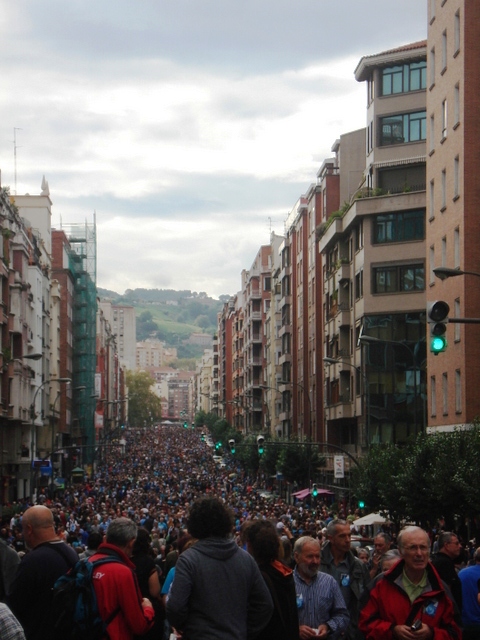
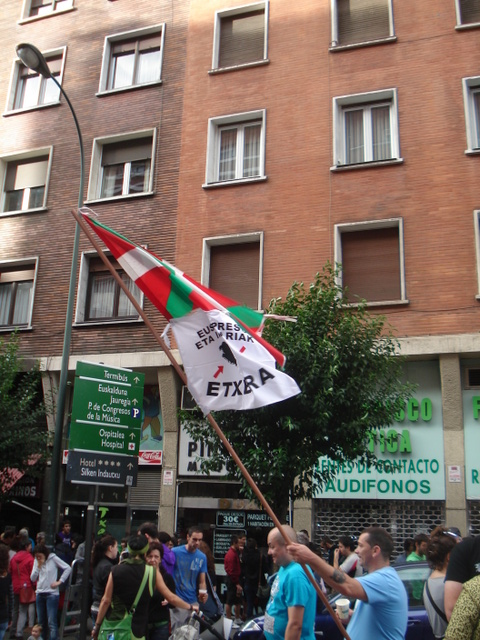
When we got off the tram at the stop nearest our hotel, we ended up in an enormous demonstration for amnesty of Basque political prisoners. There were tens of thousands gathered, with helicopters above, bands, people chanting and handing out flyers. Funny, though, the mood was more like that of a street festival than a political rally. We enjoyed being there–and really got to see the passion of the Basque people demonstrated once again.
We’ve been so busy this week in the Veneto, and I promise to post more soon. We’ve been staying in B&B’s – a new category of lodging for Italy since 2000. Each place is better than the last—and the costs have been super-low. Who knew you could stay in Venice for about 70 Euros a night? We expected very little and got a great room and private bath in a fantastic location But we’ll do some more posts about the Veneto later this week. Not that there’s much we can say about the beauty and magic of this region—but we’ll check in nevertheless.


Donostia is the Basque name for San Sebastian on the northeastern Coast of Spain. I’m quite sure that I have a prejudice for this part of the world, so pardon me for gushing. The city itself is elegant and joyful, the people friendly and exuberant, the beach is amazing, the food—well, the food is simply the best. Many of Europe’s leading chefs have their roots here in the Basque countryside and the creative cuisines of the Pais Vasco (Euskal Herria).
We stayed in an apartment near Ondaretta Beach—a great location and because we were (paying) guests of the homeowners, they were able to show us where to park for free in the city. Last time we were in Donostia, we paid for underground parking lots and prices were obscene. This time, there’s more of our budget left for food and wine.
We visited the really entertaining aquarium, as well as the sensational Museum of Basque Culture, San Telmo. San Telmo is a former convent with a new modern addition. You move from modern wing to chapel to cloister while walking through the beautifully curated exhibitions. I learned a lot here, and found it to be the best Basque cultural museum I’ve seen—much more comprehensive than the one in Bilbao or Gernika. And free on Tuesday, which is when we decided to go. We used the excellent English audio guide because text is displayed only in Euskara and Castillano.
While we’re talking culture, a major focus of Basque culture is FOOD! That said, I posted a facebook video of the Txikiteo——that is the Basque word for a tapas crawl. (Here they are Pintxos, not Tapas—a funny scene in the film “The Way” with Martin Sheen illustrates this.) We had such amazing food. Our budget doesn’t allow for visits to world-famous Michelin starred restaurants such as Arzak, but we don’t feel the least bit deprived. The bars and taverns here take great pride in their food offerings—displaying them artistically and happily describing and recommending their favorites. Hot pintxos are sometimes displayed and then heated to order, but more often listed on a chalk board and made one by one. Our favorite was Bordi Berri, where we enjoyed a slow-cooked breast of duck—still pink in the middle with a wine sauce that defies description. For non meat-eaters there is an embarrassment of riches when it comes to fish and seafood. PInxtos of Bacalao al Pil-pil (cod with an olive-oil emulsion sauce, the technique for which I may never master), and possibly the best grilled octopus I’ve ever tasted. We’ll talk a bit more about pinxtos in the Bilbao post. House reds are a Euro or two, there’s a list of fancier wines by the glass, and it’s worth ordering a Txakoli with seafood—if only to watch the dramatic style of pouring this local fizzy white wine—made in Getara.
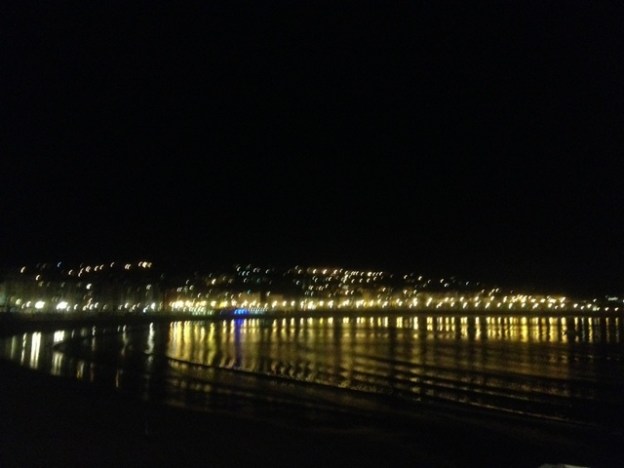
We’ve had a lot of beach time on this trip, so we walked on the beach in Donostia, but didn’t really linger—too little time to waste. October weather was warm, and although it was overcast people still gathered at the beach. Swimmers, paddle-boarders, kids playing beach soccer, and all the usual beach activities. Then there’s the promenade at Playa La Concha—it goes all the way from Ondaretta to the fishing port—a couple of miles. The white-painted cast iron railing is world famous; the lighting at night is almost theatrical. There is a designated bike and jogging path, and the main promenade is filled, day and night, with people strolling along, enjoying the breeze and observing the action. Everyone seems to walk A LOT here, and people seemed so fit and happy. The walkers range from age 2 (with their families) to age 90, with beautiful people stopping by the Belle Epoque bath houses to visit a spa or rent a bike or kayak.
The beaches of Donostia are bordered by two small mountains. Monte Urgul on one side and Monte Igueldo on the other. One day, we stopped at the exciting Betxa market, where the meat, fish, and produce being sold was overwhelming. Who knew there were 50 kinds of bacalao? We wished we had the kitchen time available to make a nice seafood stew, but opted instead to let the local restaurants cook for us. But we did buy some amazing cheeses—Idiazabal—a cured sheep’s milk cheese iconic in the Basque Country, and a blue queso pais that rivals the finest French roquefort, in my humble opinion. Then we bought some apples and wine, and headed for the hiking path up Mt. Urgull. There’s nothing as motivating to a hiker (at least these two hikers!) as a picnic at the top. The whole spread cost about 10 Euros. Not counting the knife and corkscrew we had to buy at the Chinese “dollar store” (euro store?) It was a bit of a scavenger hunt, but the locals were happy to give us hints and tips along the way.
The last day, we rode the tired old funicular up Mt. Igueldo. A bit of a time warp but worth the thrill of passing two cars passing on the cable line. At the top, the tacky old amusement park was pretty much empty, but reminded me of some 1960’s beach resorts in their decline. But the views—amazing! If you can’t decide between a beach vacation and a European city vacation, go to Donostia.
On the way out of Donostia, we followed my cousins’ suggestions and stopped in Getaria—about 30 kilometers west, a town renowned for great food. Every restaurant had a big wood grill outside, and the fresh catch just coming in from the port was the featured fare. We had a three course, fixed price lunch at for 20 Euros, wine included! Asparagus from Navarra, Jamon Iberico (again!) grilled sea bass, and basque tarte for dessert. We almost decided to take a nap in the square before heading back up the coast, but settled for a coffee instead.
Agur, Donostia! We’ll be back, I promise.
We are now in Venice after 5 weeks in Spain. Additional wine posts will be much shorter since our wine drinking in both San Sebastian and Bilbao often took place in Tapas (in Basque, Pintxos) bars where we were drinking the house reds. About 1 to 2 Euros a “copa” (glass). Some were better than others, but all surprisingly good. We drank mostly reds mixed in with an occasional Lambrusco and of course, Txakoli,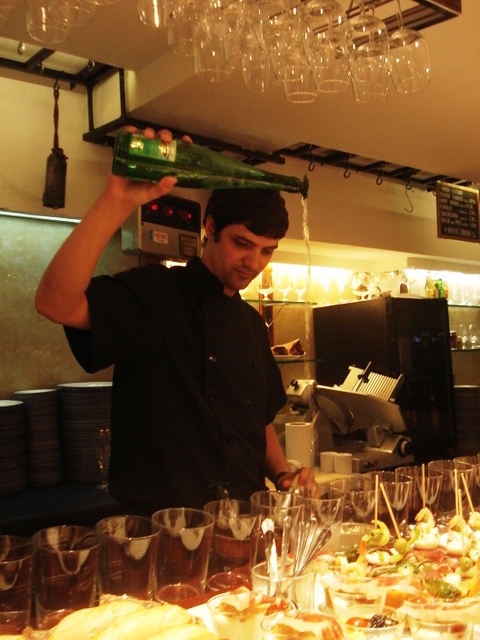 which is a Basque white wine poured from very high so it aerates as it hits the glass. It is slightly fizzy and very refreshing.
One bottle we ordered on our first night in San Sebastian(Donostia) was a2006 Vina Alberdi Crianza that was magnificient at 18 Euros in a restaurant near our apartment, Oliyos.
So far in Venice we have had some good house reds but the full bottles have been young and not particularly memorable. Also much more expensive than in Spain. We have found one wine shop that retail wines more reasonably but I don’t know any of the vineyards as I do in Spain. Will have to do much more research. Italy never used to list wines by grape varietal but they do now and it is kind of strange to see Italian Cabernets and Merlots. We had a Pinot Nero last night that was drinkable but overpriced for a 2011. I hope we will do better when we get to the country outside of Venice.
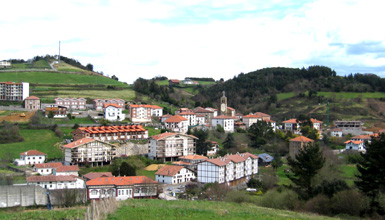
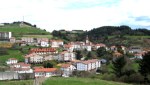
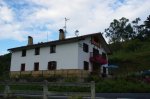
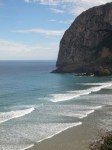
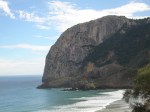
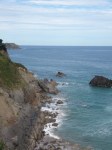
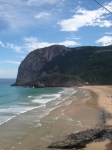

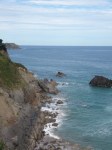
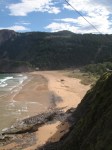
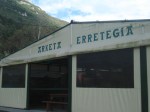
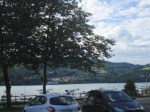
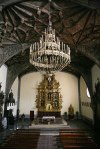
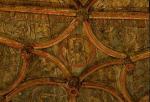
Ibarrangelu, Bizkaia (Viscaya), Spain
I don’t expect anyone else to understand how moving it is to visit the place where your grandparents and great grandparents were born, to re-visit old family and friends, and to feel that deep sense of personal history through the place and people. A few of my American relatives have had the same experience, so they know. Ray seems to understand how I feel, amazingly. I’m so fortunate to be able to share this with him!
PLEASE do click on the first image and toggle through – it is really special and worth the time.
Ibarrangelu, population 600, is one of the most beautiful places you will ever visit. When I have been away a long time, I start to think that I’ve over-romanticized the memory, that the actual place will disappoint when next I see it. However, it EXCEEDS my memory—its beauty is matched only by the warmth of the community. We were both so moved to be able to be here again.
When we drove past Laida and Laga, the two enormous beaches for this tiny town (and yes, tourists, crowd them in July and August, crowd being a relative term to local Basques) I felt I’d forgotten how beautiful a beach could be. Rocky cliffs, green rolling hills, clear blue water, and soft pink sand, all here where mountains and sea meet. Here are pictures of me overlooking the beaches of my youth. In October, the weather has been warm and there were still surfers in the water, though the waves were only a meter or two.
In 1984, the entire Busturialdea-Urdaibai region, where this gorgeous area is located, was declared a UNESCO biosphere reserve. So the beaches, hiking trails, coves, campgrounds, marshes and meadows, forests and rivers create a natural paradise. If you are a birder or naturalist, you MUST spend some time here. www.busturialdeaurdaibai.com
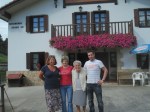
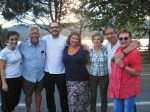
The family home is still there, although it was completely rebuilt about 20 years ago on the original foundation stones. Here is a photo with family included – Tia Carmen, cousin Maria Dolores, her son Andoitz. A couple of the “girls” I used to hang with in my teenage years stopped by to say hello as well.
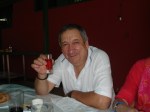
Back to the personal—my cousin Joaquín has a restaurant at Laida beach, just next to the campgrounds. After 33 years in business, he has built quite a following, and employs nine people, including his sister and nephews. Of course, in true Basque tradition, we were invited to have a meal, and spent a few hours at table eating and drinking the wonderful locally produced food. Maria Dolores joined us, although her husband was working and couldn’t be with us—he’s in one of the photos at the house though. They even can their own tuna for the salads! Everything local, everything sustainable, everything house made. The wine was produced nearby but not house made, and we made quite a dent in their cellar, as well as enjoying some traditional after-dinner beverages. We told Joaquin he is a bad influence. But boy, did we have fun!
One last thing—the Village Church was called “the Sistine Chapel of Basque Art” by the leader of the Sistine Chapel restoration team—see attached article. I remember that when we attended Mass here, I marveled that such a magnificent 16th Century church was built in such a small village. You may have seen other altars like San Andres’ but the polychrome oak ceiling is unique and marvelous, especially after restoration in the 1980’s. Here is an article about it:
http://www.elcorreo.com/vizcaya/v/20130726/costa/capilla-sixtina-vasca-20130726.html
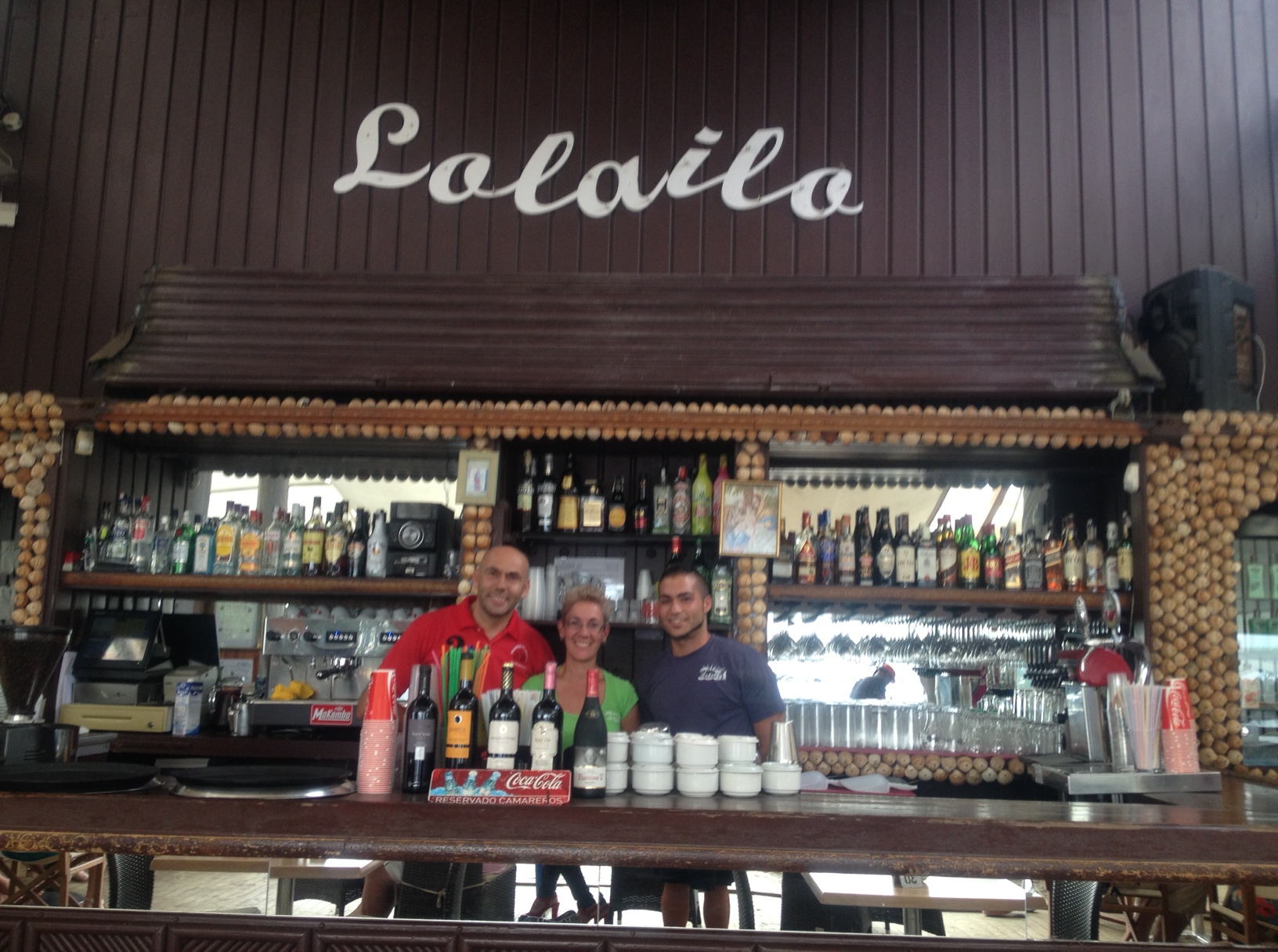
A wonderful place with great food. The Sunday barbecue is an amazing value. Super-friendly staff, great food, and so much fun!
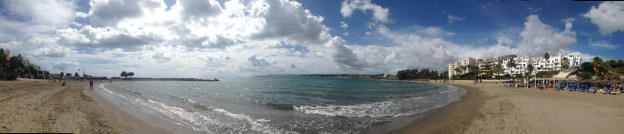
We should have posted this one nearly a week ago–but we’ve been busy traveling!! Our last day in Estepona was a great beach party! Cloudy weather made for gorgeous skies and allowed us to leave the sun for awhile and hang out at Chiringuito Lolailo where we enjoyed their Sunday barbecue. Check out the video in our previous post–what a great time!
The friendly owner and staff make you want to stay and stay. And we did!
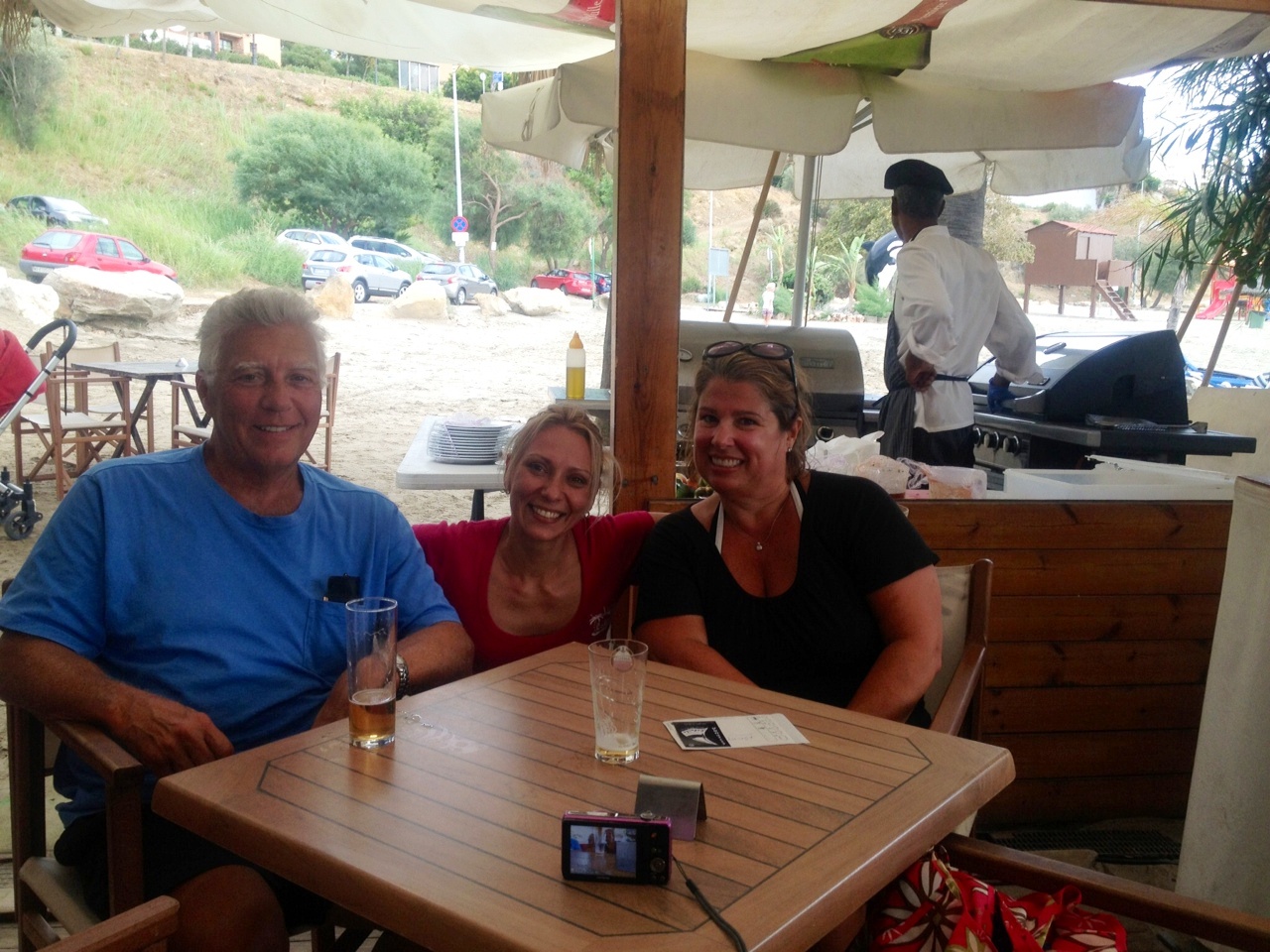
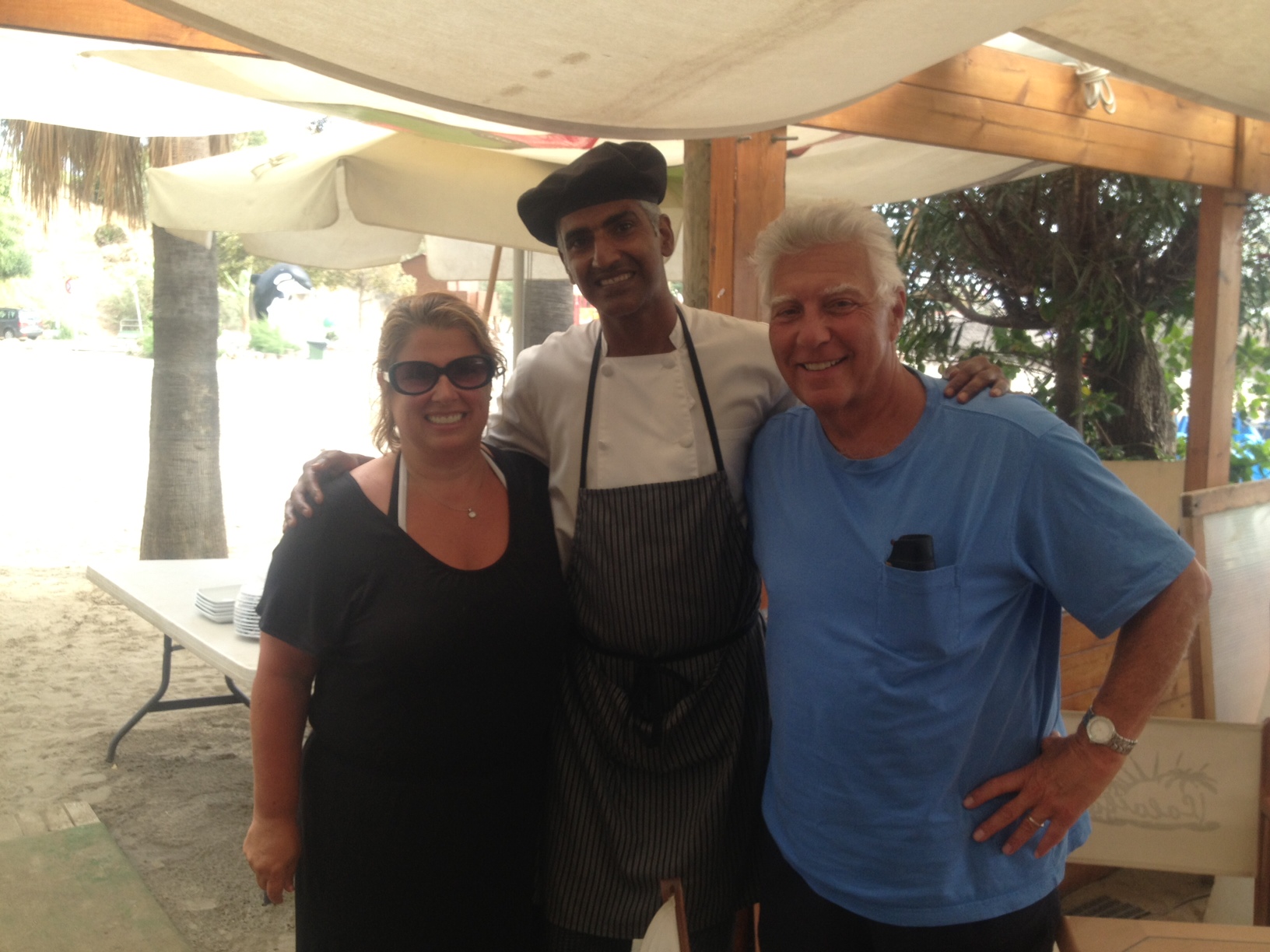
Others who made our time here great are server Neichy (from Cuba) and master of the barbecue, Zaggy (from Pakistan). Check out Neicy’s moves in the video below!
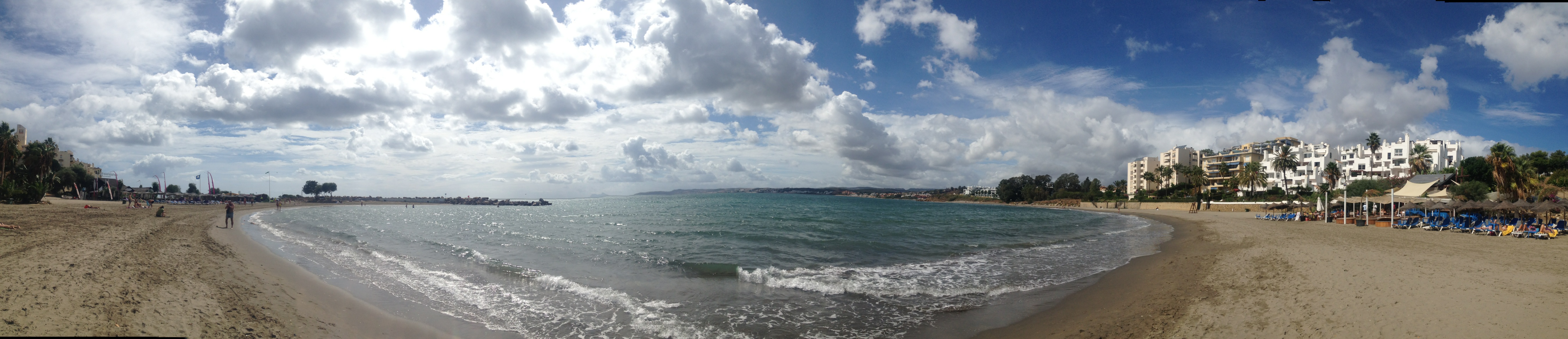
The beach cooperated by offering a cloudy day and beautiful skies. A fitting farewell beach party for our time on the Costa del Sol!
 anitaandray